video and sound. 3:38. 2025
A landscape at the edge of society. A place suspended between collapse and continuation, where the remnants of a world persist in the aftermath of an unnamed event.
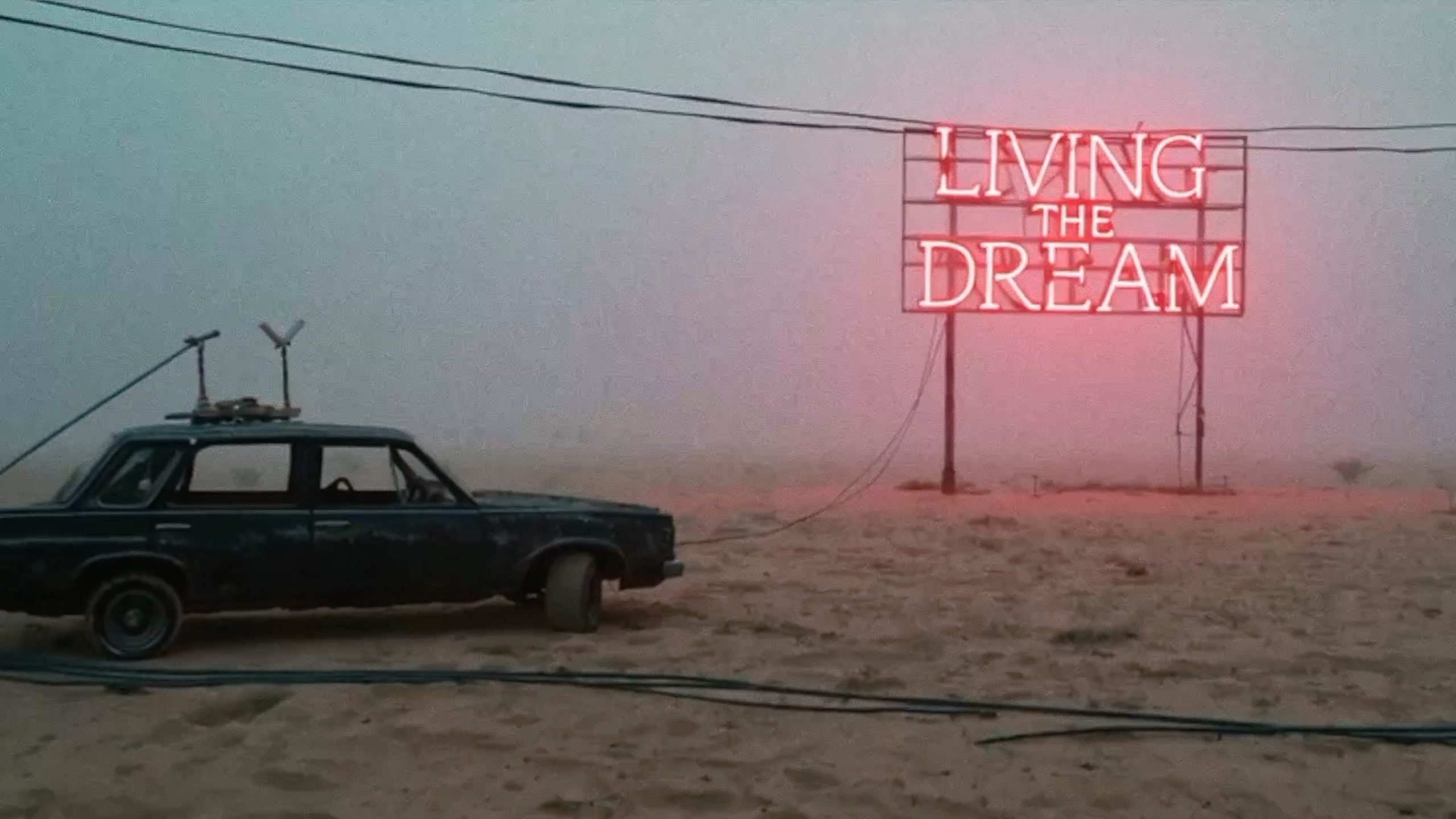
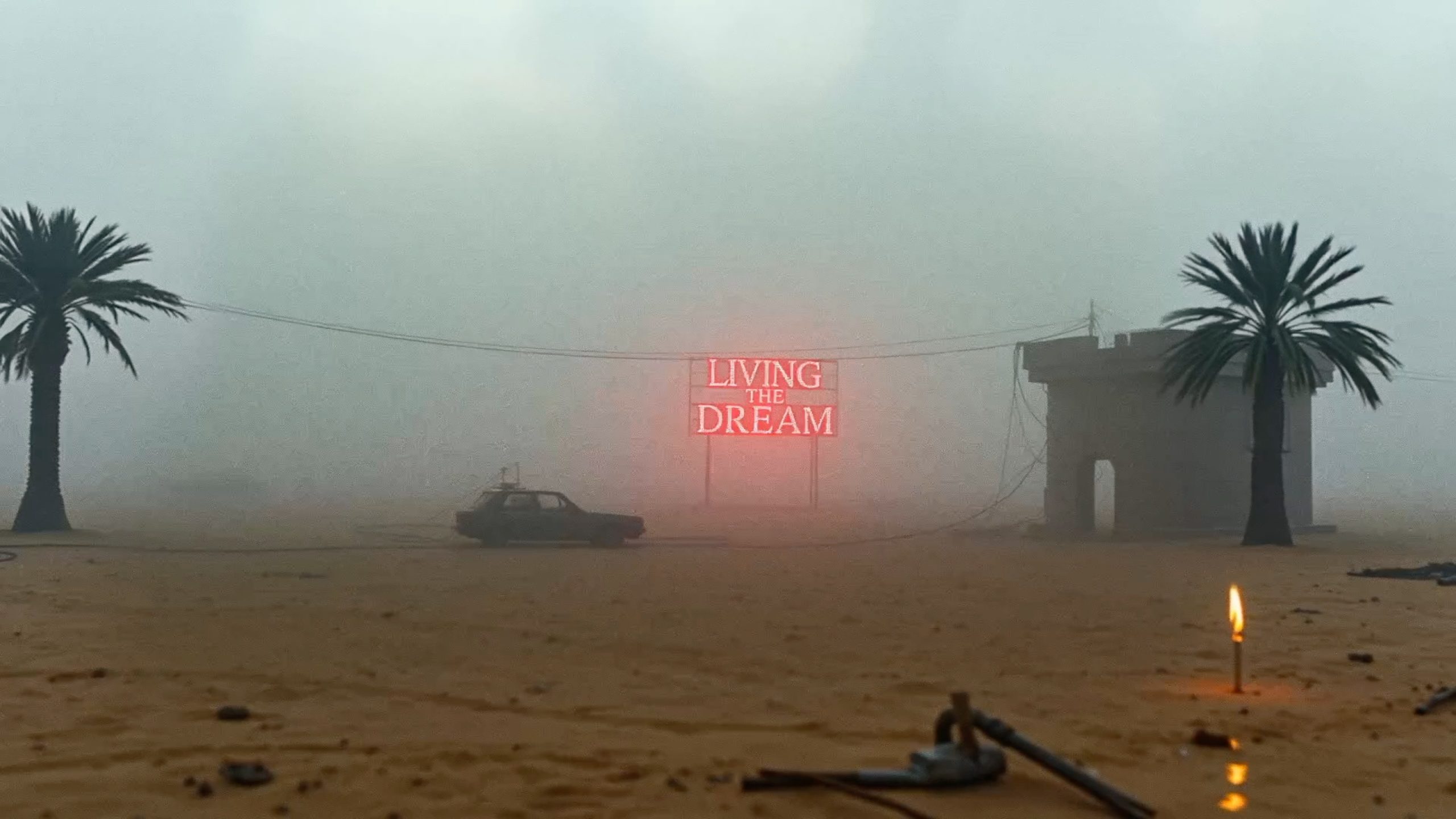
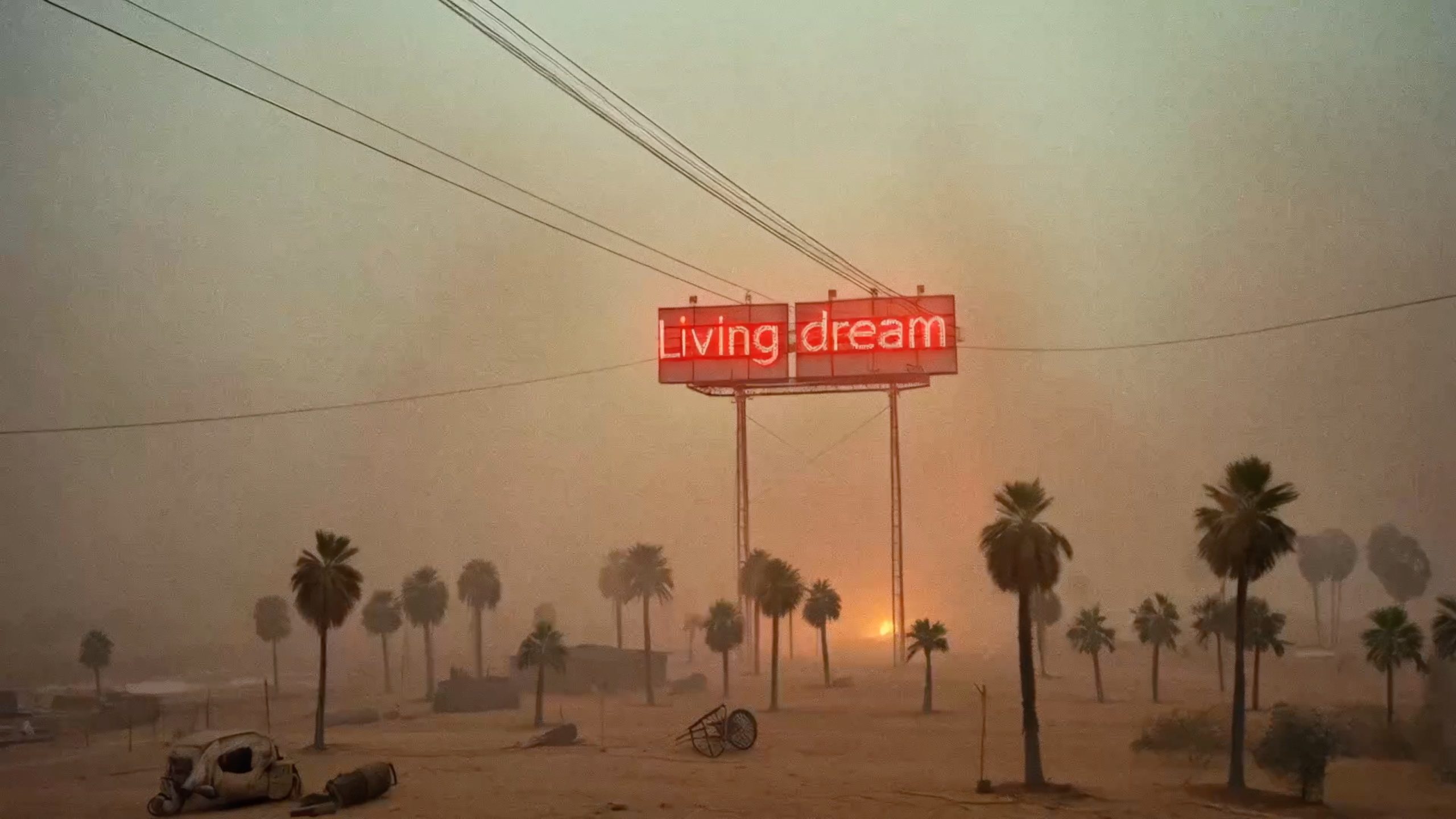
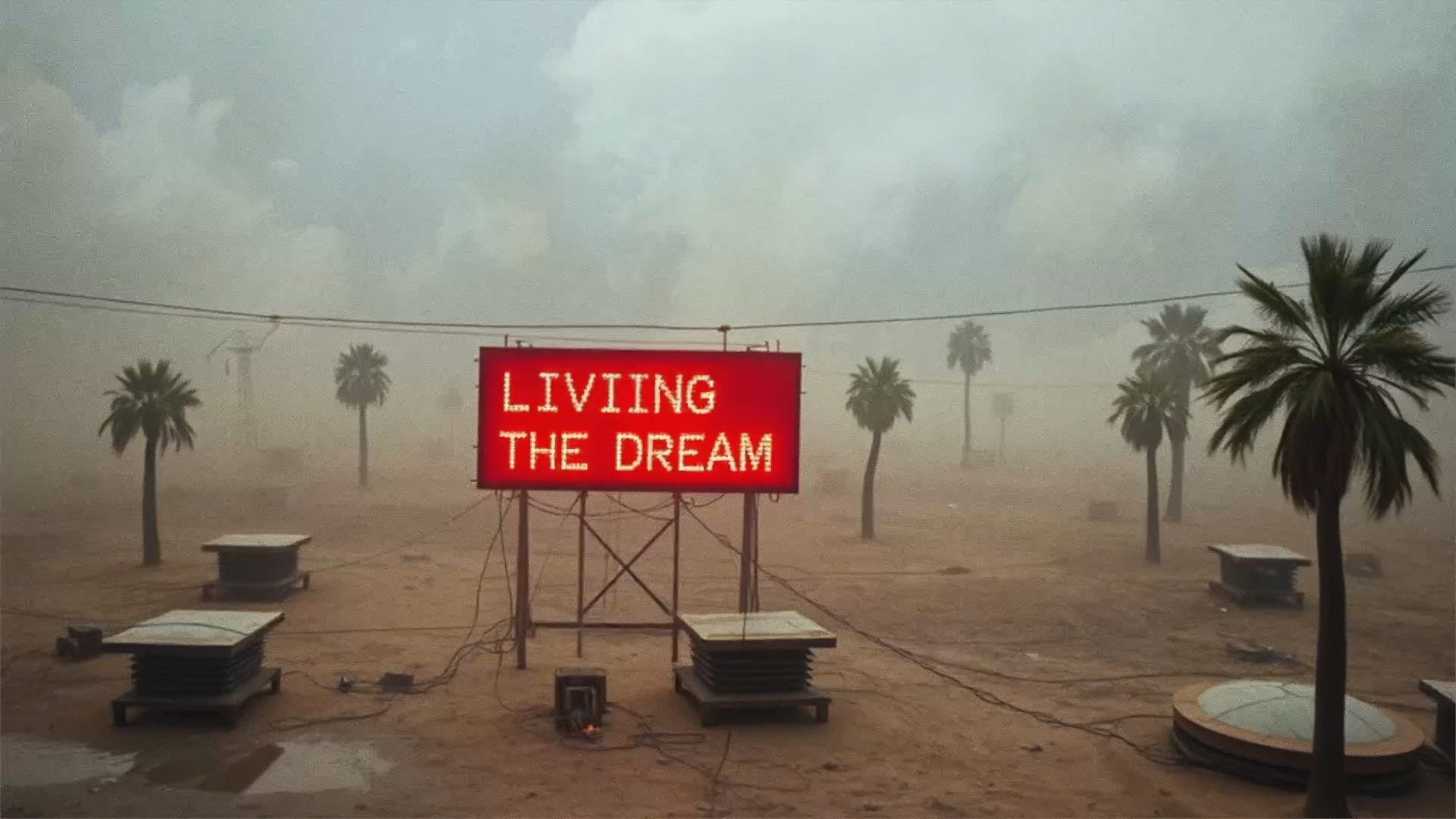
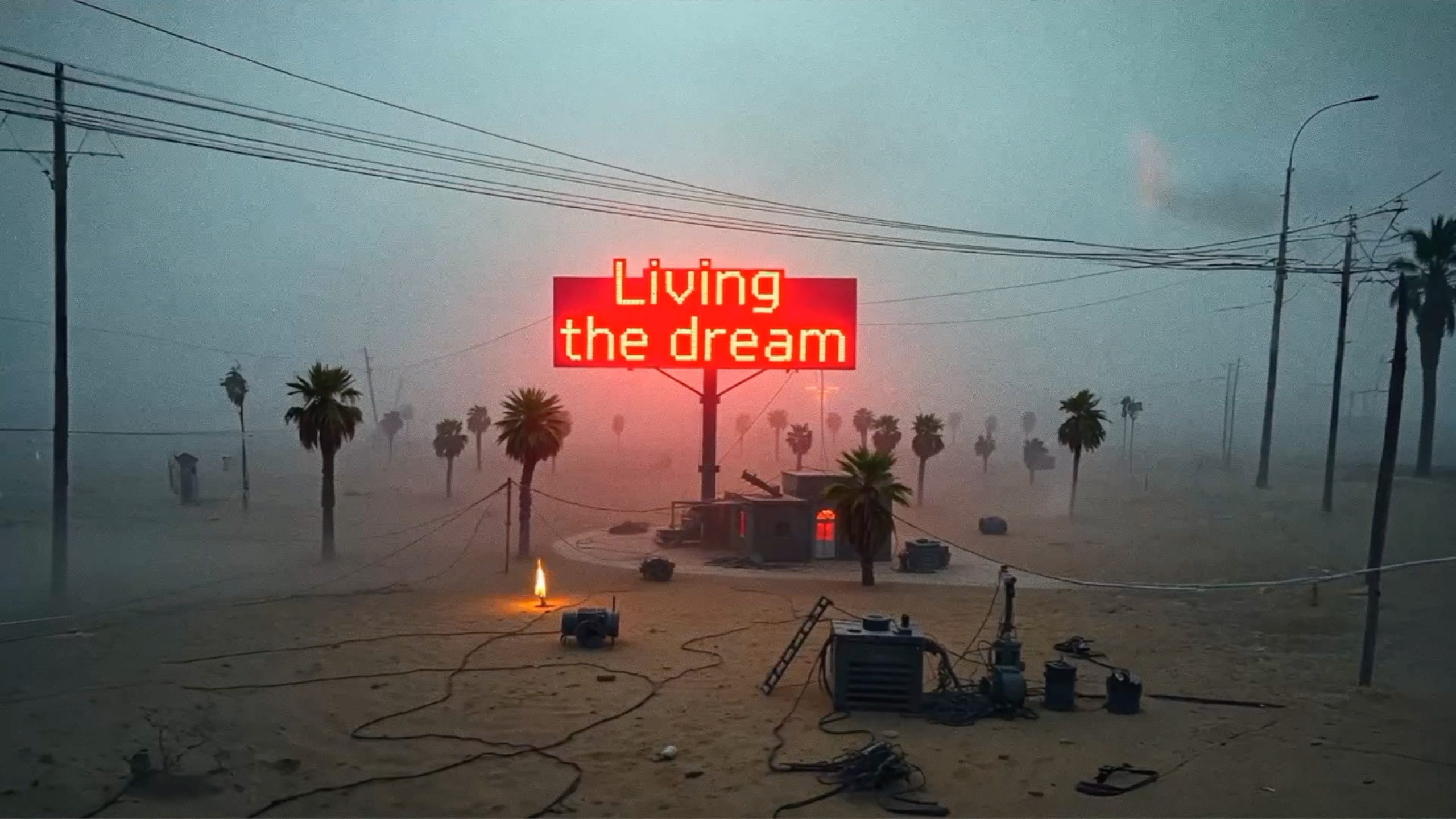
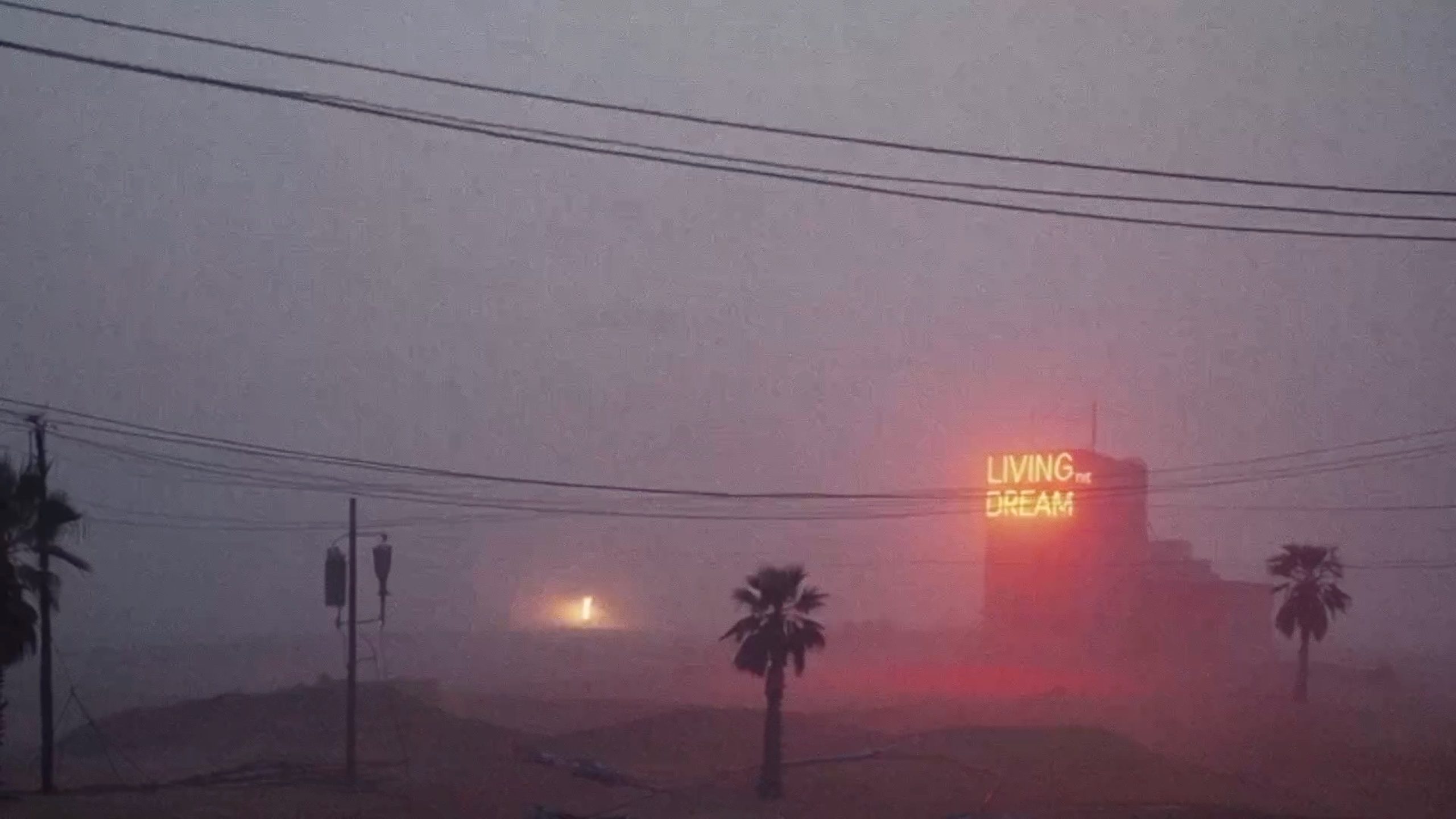
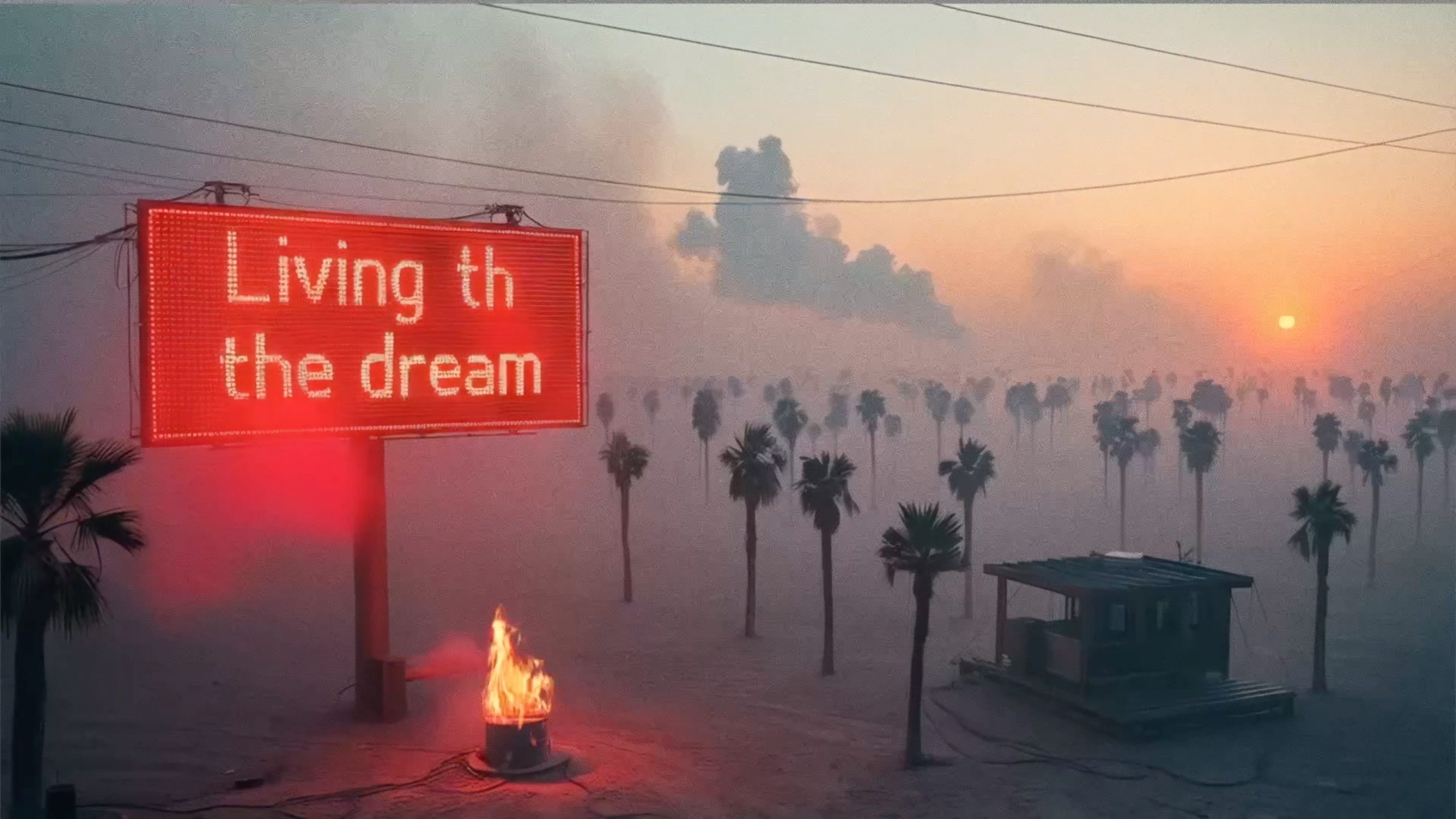
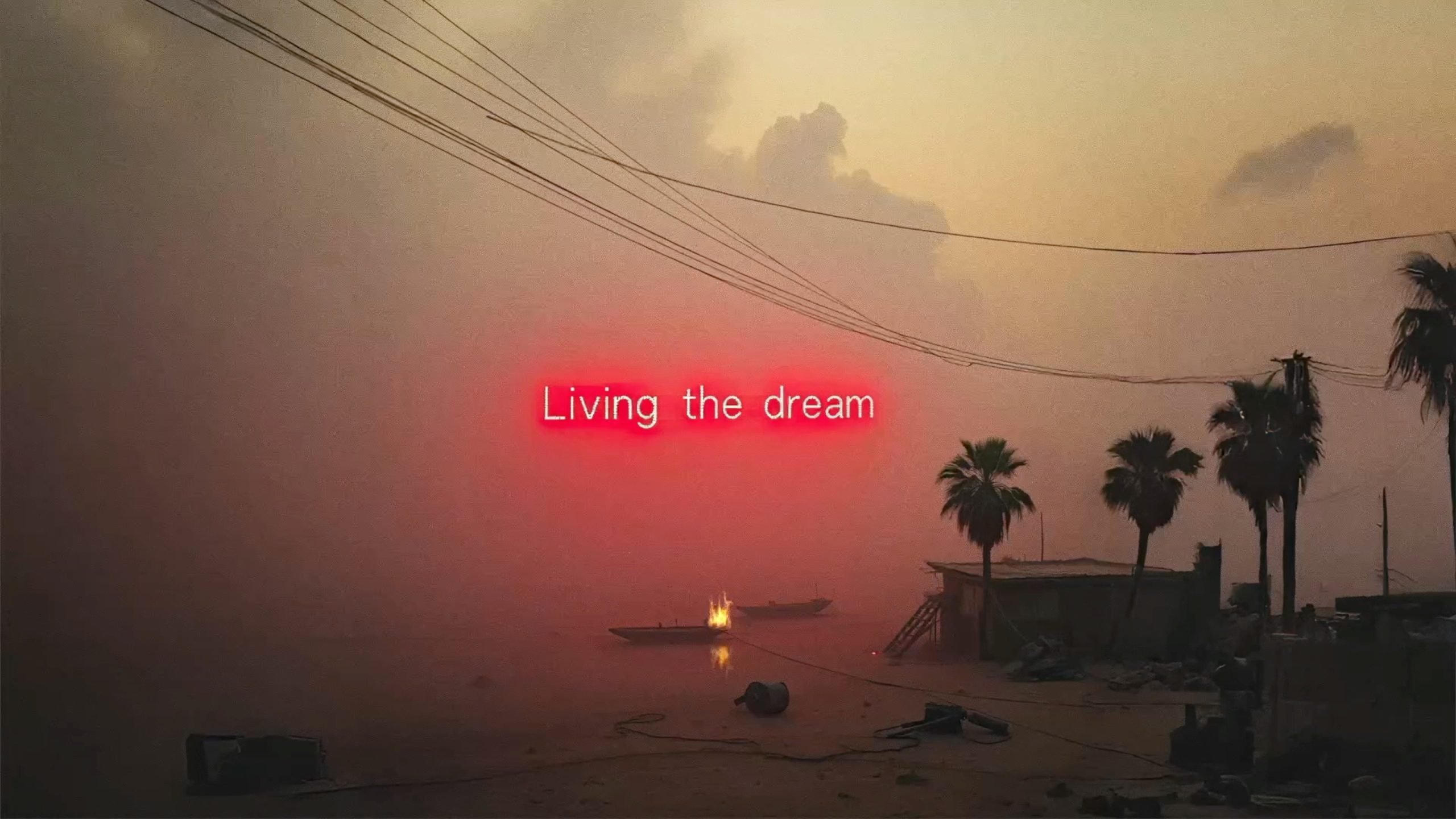
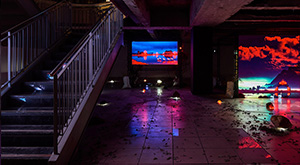
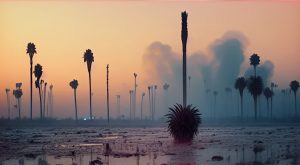
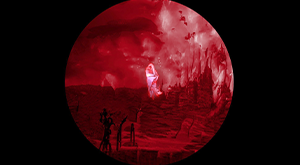
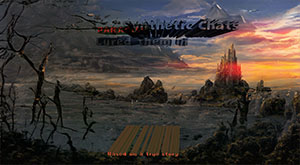
Across a vast, dust-covered terrain, palm trees, abandoned vehicles, improvised structures, exposed cables, and isolated flames emerge from a dense, shifting haze. Above the desolation, illuminated signs announce LIVING THE DREAM. Their red neon glow cuts through the dust like a promise that has outlived the world that once gave it meaning.
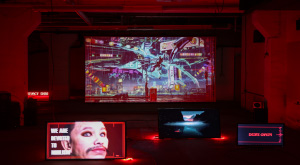
But the signs do not always get it right. Letters disappear, words become distorted, and familiar expressions fracture into strange, sometimes misspelled variations. These deliberate errors disrupt the language of aspiration, introducing glitches into the promise of a better life. The signs appear caught between communication and failure, as if the machinery producing the dream is beginning to malfunction. What was meant to inspire becomes ambiguous, absurd, and quietly unsettling.
The landscape feels both familiar and displaced. It evokes the outskirts of a city, a forgotten settlement, a deserted roadside attraction, or a failed vision of the future. Infrastructure remains, but its purpose has become uncertain. The machinery is still connected. The lights are still on. Somewhere, something continues to operate.
LIVING THE DREAM unfolds as a series of ambient scenes within a world that seems to have carried on long after the systems that sustained it have disappeared. There is no clear event, no central character, no definitive explanation. Instead, the work inhabits a suspended condition: a slow, atmospheric drift through the debris of an uncertain present.
The recurring illuminated signs become the landscape’s central contradiction. A familiar expression of aspiration, success, and self-fulfilment persists against a backdrop of exhaustion and abandonment. Their deliberate misspellings undermine the certainty of the message, suggesting a dream degraded through repetition, mistranslation, or the failure of the systems that keep it alive. The promise remains visible, but its language can no longer be trusted. The dream is still being advertised. Whether anyone is left to believe in it is another question.
Neither entirely dystopian nor nostalgic, the work occupies the space between the cinematic image of a future imagined and the material remains of a future that may already have passed. Dust obscures the horizon. Artificial light replaces the sun. Human presence is registered through objects, traces, and infrastructure rather than bodies.
LIVING THE DREAM is an environment to drift through rather than a story to follow. A quiet, dislocated vision of life at the margins, where the spectacle of progress has faded into atmosphere, language begins to break down, and the machinery of desire continues to glow in the dark.